


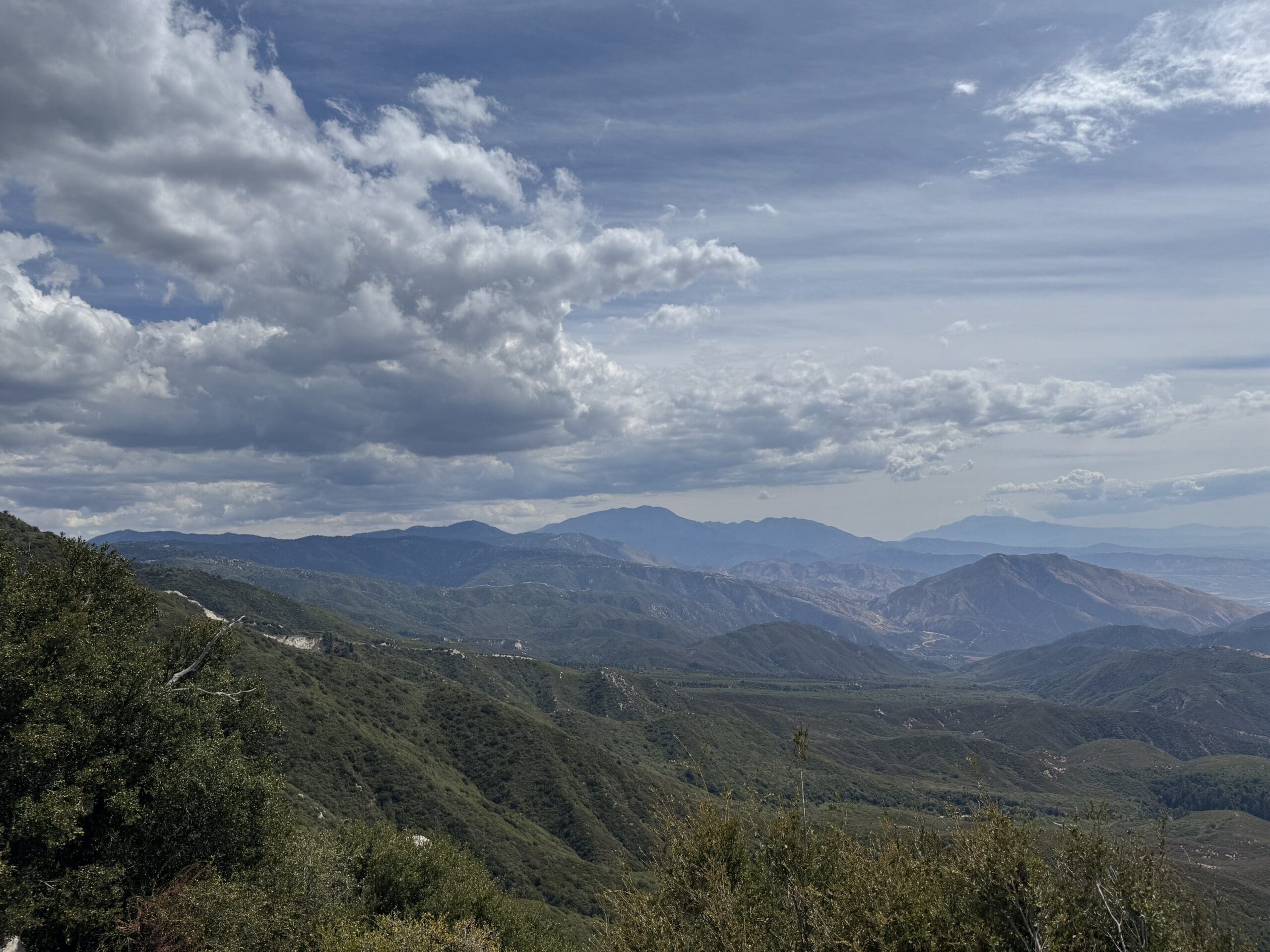
I went to the mountains because I didn’t know what else to do.
Nearly three decades of monastic life. Decades of service, study, devotion — the kind that soaks through to the bones until you can no longer tell the difference between vocation and self. I had given everything I had to give, and somewhere in the giving, I had lost the thread of why I began. The word for this, in Sanskrit, is parikhinna — exhausted, worn through. I didn’t know that word for what I was feeling then. I only knew I had to stop.
So I went to the mountains with my dog Lhasa, the jindo who had found me at my worst hour and who I always credited with saving me. We began, the two of us, sitting outside in the evenings listening to the forest. That was enough, for a while. Just that.
This is the story of how the Bhagavad Gita stopped being a text I taught—and became a way I learned to live.
Then COVID came, and the world went quiet, and the land started talking.
There was a particular piece of ground at the hermitage — sloped, neglected, full of possibility. Something about it had been speaking to me since I arrived, and when everything else closed down, I finally listened. I would make this into a garden. I would make this into Vrindavan — that sacred grove where Krishna played, where everything was alive and abundant and shot through with the divine.
I dug in. Literally. I moved earth, turned soil, planted seeds. It was not, in retrospect, the most sensible project for someone who needed rest. But the work had a quality that rest couldn’t provide: it was honest. The land told you immediately whether what you were doing was right. It didn’t flatter. It didn’t defer. It had no investment in your self-image. If you didn’t water, things died. If you chose the wrong location, things failed. If you brought your attention and your care consistently, something extraordinary happened — the land came alive under your hands and began, in its way, to give back.
At the same time, I was studying the Bhagavad Gita as though my life depended on it. Which, in a way, it did.
I had been teaching the Gita for years — or trying to. Trying to get to the teacher trainings, conferences, and lectures beyond the ashram walls into the wider yoga community. What stopped me cold, again and again, was something I kept hearing when I would meet yoga teachers in person:
“Teach the Gita? What? They didn’t do that in my training.” Bright, devoted practitioners, genuinely hungry for depth, who had never been given a way into the most important philosophical text in their tradition.
Not because they weren’t capable—but because no one had translated the text into something livable.
This troubled me more than I knew how to say.
So in the mountains, with the garden and the Gita side by side, I started to understand something I had been circling for years: the text and the land were teaching the same thing. The Gita’s buddhi yoga — the foundational yoga of discernment, of seeing clearly from a bird’s-eye view before you act — was exactly what any good gardener does before touching a shovel. Where does the light fall? What does this soil want? What is already here that I haven’t noticed yet? The Gita’s karma yoga — the yoga of action offered without attachment to results — was exactly what it felt like to mulch the beds in autumn knowing the frost was coming anyway. You plant the seed. You cooperate with the rain and the sun. You do your part, and you relinquish the rest.
The garden was the Gita. The Gita was the garden. And both, slowly, were teaching me to live.
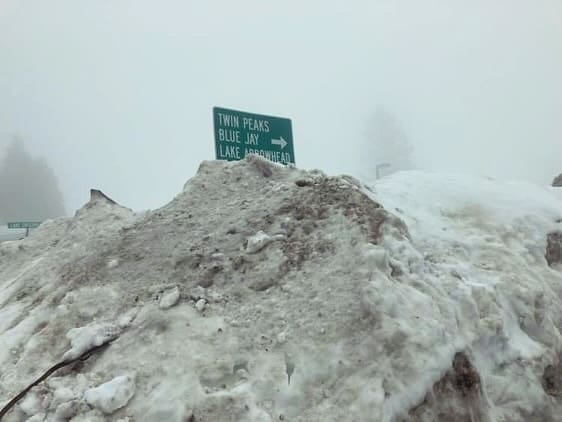
Then the storm came.
They were calling it the storm of the century, and they were right. Lhasa and I came home just ahead of it, and through that first night, the snow fell and kept falling. By morning, three feet. By afternoon, six. By the following morning, nine feet of snow had buried the fence, covered the garden entirely, and sealed the door. The grocery store collapsed under the weight of it. Help didn’t come — not for nearly a month. It was, for our small mountain community, a natural disaster that stripped everything down to what was true.
The truest and most costly thing was that Lhasa died. She had fallen ill the night the storm began, and I could not get her to a veterinarian. I sat with her through it. Then I was alone.
Grief does something that nothing else does. It removes the decorative layers — the stories you’ve been telling yourself about who you are, what you’re doing, what you’re building — and leaves only the essential. In that month of snow and loss, I read the Gita’s eighth chapter over and over, the one that speaks of the migration of souls, of what carries forward and what releases. I thought about Lhasa returning to the garden. I thought about what I was holding onto.
I had, in the months before the storm, been quietly making peace with giving up my teaching life. No one is looking for what I have to offer. This is mine — my study, my practice, my relationship with the text. I had been talking myself into retirement. Into smallness. Into the very thing the Gita most consistently warns against: the abandonment of dharma dressed up as humility.
The storm ended that conversation.
When the snow finally melted and the garden woke up again — aching, changed, alive — two Akitas arrived in my life, Jude and Stevie, rescued in the aftermath of the same storm. And I knew, with the clarity that grief sometimes bestows, that I had to come back to teaching. Not because I was ready. Not because the path was clear. But because it was mine, and I had spent long enough pretending otherwise.
Leaving wasn’t a single decision. It was a series of small, irreversible ones.
What followed was years of learning — how to leave a community I had belonged to for three decades, how to build something independent, how to step from nivritti (the inward-turning path I had lived for so long) toward pravritti (engagement, action, the world). Every lesson the Gita had given me in the garden, I had to apply now to my own life: watch the light before you dig. Know the bigger picture before you act. Do what you can do, offer it, release the rest.
I came to Louisville. To a new city, a new garden, a new beginning.
I am still at the threshold. Still watching the light, reading the ecosystem, learning the land before I touch a shovel. This is buddhi yoga. This is where every cycle begins.

A Different Way to Understand the Bhagavad Gita
Gita’s Garden is what I learned on that land and in that loss. It’s a framework for understanding the Bhagavad Gita — not as a battlefield text about a warrior’s duty, but as a gardener’s text about the cycles of cultivation, the nature of right action, the practice of love, the sharpening of wisdom. Four yogas, four seasons: buddhi as the bird’s-eye view of autumn, karma as the active work of spring, bhakti as the abundance of summer, jnana as the deepening discernment of harvest.
The Gita was designed to meet you exactly where you are. You don’t have to start at the beginning and wonder why everyone is on a battlefield. When you open the Gita, you are already in a garden. You are already in a place of cultivation — a place designed for you to flourish, if you’re willing to do the consistent, imperfect, ongoing work of tending it.
That is what I am here to offer. Not the Gita as performance or credential or inspiration-content. The Gita as the text that stood by me through exhaustion and exile and loss, that taught me to see the land clearly, that gave me a language for what was happening when my dog died and the snow wouldn’t stop and the silence of the mountain became, finally, the only honest teacher I had left.
It’s a very practical text, once you know how to read it.
This became the foundation for a workshop I’m opening this spring: The Gita’s Garden.
A way of entering the Bhagavad Gita not as something to decode – but as something to live.
I’m opening that doorway this spring.
Gita’s Garden is 90-minute workshop offering a clear, lived way into the Bhagavad Gita through the four yogas.
Hari Om.


